India's Consumer Inflation Likely Climbed Above RBI's 4% Target in June: What It Means for Households, Interest Rates, and the Economy
India's consumer inflation likely rose above the RBI's 4% target in June 2026. Explore the causes, economic impact, interest rate outlook, and expert analysis.
By - Sudhir Taliyan Chaudhary Talan Khap
India's inflation trajectory may have entered a new phase after more than a year of relative stability. Economists surveyed ahead of the official June inflation release expect consumer price inflation to have risen above the Reserve Bank of India's (RBI) medium-term target of 4% for the first time in 16 months, driven by rising food prices, higher fuel costs, weather-related risks, and global geopolitical tensions. (Reuters)
According to a Reuters survey of economists, India's Consumer Price Index (CPI) inflation is projected to have accelerated to around 4.3% in June, compared with 3.93% in May. Although the expected increase remains well within the RBI's official tolerance band of 2–6%, crossing the 4% mark carries significant implications because it is the central bank's formal inflation target. (Reuters)
The official inflation figures are scheduled to be released by the Ministry of Statistics and Programme Implementation (MoSPI), providing investors, policymakers, businesses, and households with fresh insight into India's economic outlook.
Why Inflation Is Expected to Rise
Unlike previous inflationary episodes that were fueled by widespread price increases across the economy, economists believe the June rise is primarily concentrated in a few categories.
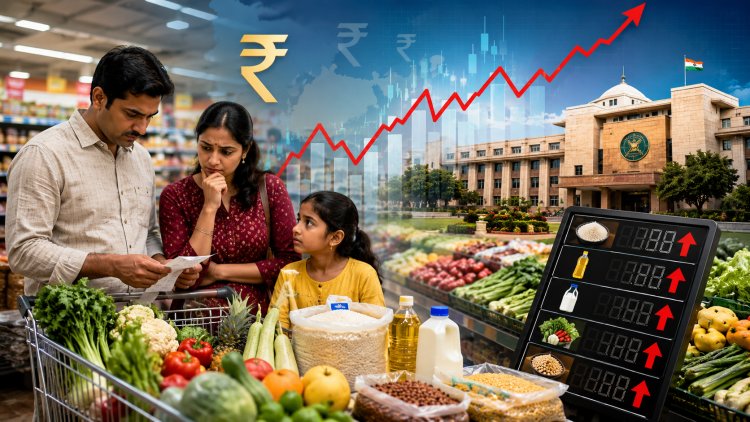
Food inflation remains the biggest concern. Vegetables, pulses, edible oils, milk products, and certain cereals have witnessed gradual price increases over recent weeks. While food prices had moderated significantly earlier in the year due to favorable base effects and improved supplies, those benefits are now fading.
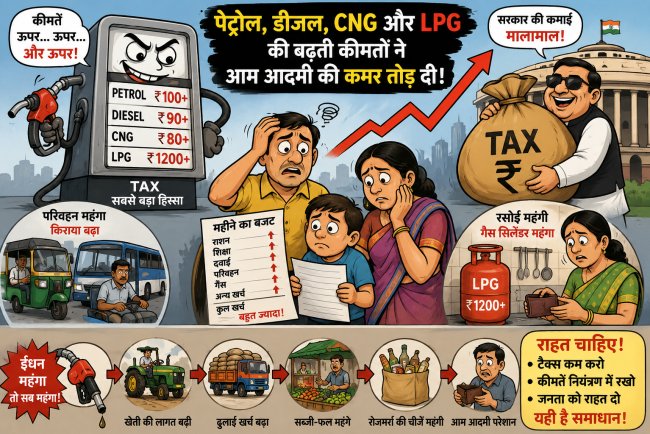
Fuel prices have also become an important contributor. Domestic fuel price increases during May have pushed transportation and logistics costs higher. Since transportation costs influence almost every sector of the economy, the impact extends well beyond petrol and diesel purchases.
Global crude oil markets have experienced renewed volatility amid geopolitical tensions in West Asia. Rising international energy prices generally translate into higher import costs for India, one of the world's largest crude oil importers. (Reuters)
Weak Monsoon Adds Fresh Uncertainty
Weather continues to play a decisive role in India's inflation story.
Economists are increasingly monitoring the progress of the southwest monsoon because rainfall directly affects agricultural production, particularly food grains, vegetables, fruits, and pulses.
Any prolonged rainfall deficit or uneven distribution during the June-September monsoon season could reduce crop yields and tighten food supplies later in the year.
Several economists have warned that weather-related disruptions remain among the biggest upside risks to inflation over the coming months. (Reuters)
Food Inflation Still Holds the Key
Food carries one of the highest weights in India's Consumer Price Index basket.
This means even relatively small increases in food prices can have a noticeable effect on headline inflation.
The following categories are being closely watched:
-
Vegetables
-
Fruits
-
Pulses
-
Cereals
-
Milk
-
Edible oils
-
Sugar
Any sustained increase across these categories could keep headline inflation elevated through the second half of the year.
For lower-income households, food inflation has a disproportionate impact because food accounts for a much larger share of monthly expenditure compared with wealthier households.
Fuel Costs Ripple Across the Economy
Higher fuel prices rarely remain confined to petrol pumps.
Transportation companies face higher operating costs.
Manufacturers pay more to transport raw materials.
Retailers incur higher logistics expenses.
Eventually, many of these increased costs are passed on to consumers through higher prices for everyday goods.
This chain reaction is one reason economists carefully monitor energy markets when forecasting inflation.
RBI's Inflation Target Explained
India's inflation-targeting framework aims to keep CPI inflation at 4%, with an acceptable range between 2% and 6%.
Crossing the 4% mark does not automatically require immediate monetary tightening.
However, persistent inflation above target could influence future RBI policy decisions, particularly regarding interest rates.
The RBI left its key policy rate unchanged at 5.25% during its June monetary policy meeting while continuing to monitor inflation developments. (Reuters)
Why the 4% Level Matters
Some readers may wonder why economists are paying so much attention to a relatively modest increase from 3.93% to around 4.3%.
The answer lies in inflation expectations.
When inflation remains close to target, businesses and consumers generally expect prices to stay relatively stable.
However, if inflation begins rising consistently above target, expectations can shift.
Businesses may increase prices more aggressively.
Workers may seek higher wages.
Consumers may accelerate purchases before prices rise further.
These behavioral changes can themselves contribute to higher inflation over time.
Core Inflation Remains Relatively Stable
Despite rising food and fuel costs, underlying inflation appears considerably more stable.
Economists estimate core inflation—which excludes volatile food and fuel prices—to remain near 4%, indicating that price pressures across the broader economy are still relatively contained. India does not officially publish core inflation data, but analysts calculate it independently. (Reuters)
Stable core inflation suggests that demand-driven inflation has not become widespread.
Instead, current inflation appears largely driven by supply-side pressures.
Wholesale Prices Tell a Different Story
India's Wholesale Price Index (WPI) has remained significantly higher than consumer inflation.
Wholesale inflation measures price changes faced by producers and manufacturers rather than consumers.
Higher wholesale prices often take time to filter through the economy.
If businesses continue passing on increased production costs to consumers, retail inflation could remain elevated over coming months.
Economists estimate wholesale inflation remained above 9% during June, highlighting continued pressure within production chains. (Reuters)
Impact on Indian Families
For households, higher inflation directly affects purchasing power.
The biggest impacts are likely to be felt through:
https://politicsinsightindia.com/new/india-us-trade-deal-farmers-warning
-
Grocery bills
-
Cooking oils
-
Fresh vegetables
-
Milk products
-
Transportation costs
-
Household fuel
-
Restaurant prices
Middle-income families may also notice higher education, healthcare, and service costs if inflation remains elevated for several months.
What It Means for Borrowers
Inflation and interest rates are closely connected.
If inflation continues climbing above the RBI's target for an extended period, the central bank could delay future rate cuts or even consider tighter monetary policy if price pressures broaden.
Higher interest rates generally mean:
-
More expensive home loans
-
Higher vehicle loan EMIs
-
Increased business borrowing costs
-
Slower credit growth
- https://politicsinsightindia.com/new/trump-trade-deal-vs-bharat-hit
At present, however, most economists do not expect an immediate policy change solely because June inflation may exceed 4%.
Investors Are Watching Closely
Financial markets closely monitor inflation data because it influences multiple asset classes.
Equity Markets
Higher inflation can affect company profits through increased input costs.
Consumer-focused businesses often experience pressure if households reduce discretionary spending.
Bond Markets
Bond investors closely watch inflation because rising prices reduce the real return on fixed-income investments.
Higher inflation generally leads to higher government bond yields.
Currency Markets
Persistent inflation can influence exchange rates through its impact on monetary policy expectations.
Businesses Face Cost Pressures
Manufacturers and retailers continue balancing rising costs with consumer demand.
Companies face difficult decisions regarding:
-
Pricing strategies
-
Inventory management
-
Supply chain adjustments
-
Wage increases
-
Capital investment
Businesses with stronger pricing power may successfully pass increased costs to consumers, while highly competitive sectors may absorb part of those costs, reducing profit margins.
Agriculture Remains Central
Agriculture continues to play a critical role in India's inflation outlook despite the economy's growing service sector.
Good harvests generally support lower food prices.
Poor weather conditions can quickly reverse inflation trends.
Government procurement policies, storage infrastructure, and transportation efficiency also influence food price stability.
Global Factors Cannot Be Ignored
India's inflation outlook increasingly depends on international developments.
Major external risks include:
-
Crude oil prices
-
Shipping costs
-
Fertilizer prices
-
Commodity markets
-
Currency movements
-
Geopolitical conflicts
Because India imports substantial quantities of crude oil and several industrial inputs, global price shocks often feed into domestic inflation.
Comparing With Previous Months
Inflation had remained below the RBI's 4% target for much of the past year, offering policymakers greater flexibility.
May inflation stood at 3.93%, up from 3.48% in April, but still below the target. The anticipated June increase would mark the first breach of the 4% target in about 16 months if official data matches economists' forecasts. (Press Information Bureau)
What Economists Are Saying
Forecasts for June inflation vary considerably.
The Reuters survey found estimates ranging from 3.65% to 5.50%, reflecting uncertainty over food prices, fuel costs, and weather conditions. (Reuters)
Independent research agencies have also projected inflation around the mid-4% range for June, citing stronger food inflation and the gradual pass-through of fuel costs into consumer prices. (ICRA)
What to Watch Next
The June inflation release will provide only one piece of the broader economic picture.
Analysts will closely monitor:
-
July food prices
-
Monsoon progress
-
International crude oil prices
-
Global commodity markets
-
Government food stock levels
-
Fuel pricing decisions
-
Future RBI policy meetings
If food prices stabilize and monsoon conditions improve, inflation could moderate later in the year.
However, prolonged weather disruptions or another spike in global energy prices could keep inflation above target for longer.
Outlook
India's economy continues to demonstrate resilience, supported by domestic consumption, public investment, and services-sector activity. Yet inflation remains one of the most closely watched indicators because it affects every household and shapes monetary policy.
A temporary move above the RBI's 4% inflation target does not necessarily signal the beginning of a prolonged inflation cycle. Much will depend on how food prices evolve, whether monsoon rainfall supports agricultural output, and if global energy markets stabilize.
For now, economists believe June represents an important turning point rather than a cause for alarm. Policymakers are expected to remain data-dependent, balancing inflation risks against the need to support economic growth.
With official figures due shortly, investors, businesses, and consumers alike will be watching closely to see whether June's inflation reading confirms expectations—and whether it marks a brief interruption in India's recent period of price stability or the start of a more persistent inflationary phase. (Reuters)
Get every story on your phone
Join our channel and never miss an update.
What's Your Reaction?