Iran Backs India’s Diplomatic Role in West Asia Crisis
Iranian Deputy Foreign Minister Kazem Gharibabadi said Iran would welcome any Indian diplomatic initiative aimed at reducing tensions in West Asia. During his visit to New Delhi, he stressed that dialogue and diplomacy are the only effective solutions to the ongoing regional crisis. He also highlighted India’s growing global role and its potential contribution to peace and stability in the region.
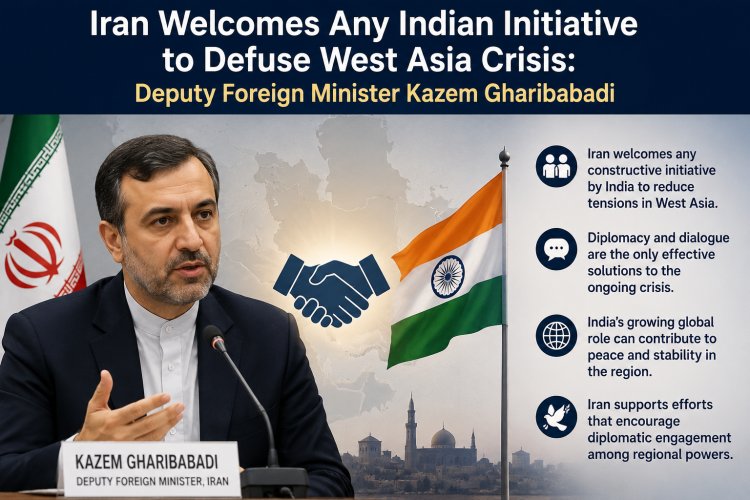
Iran Welcomes Any Indian Initiative to Defuse West Asia Crisis: Deputy Foreign Minister Kazem Gharibabadi
Iran has said it would welcome any constructive effort by India aimed at reducing tensions in West Asia, as regional instability continues to raise concerns over security, trade, and energy supplies across the world.
Speaking during his visit to New Delhi, Iranian Deputy Foreign Minister Kazem Gharibabadi emphasized that diplomacy and dialogue remain the only effective path toward resolving the ongoing crisis in the region. He noted that India, because of its growing international influence and balanced foreign policy, could play a positive role in encouraging peace efforts.
According to remarks reported by multiple media outlets, Gharibabadi said Iran would support “any Indian initiative” designed to ease tensions and encourage diplomatic engagement among regional powers. He described India as an important global actor with the ability to contribute to stability and constructive dialogue.
The Iranian minister also indicated that discussions within the BRICS grouping over the West Asia conflict have faced challenges in reaching a unified position. He suggested that one member country had reservations regarding a joint consensus statement, though he did not publicly identify the country involved.
During the interaction, Gharibabadi stressed that military escalation would only deepen instability in the region. Instead, he called for negotiations, regional cooperation, and international diplomatic engagement to prevent further deterioration of the situation. His comments come at a time when several countries are expressing concern over the wider economic and geopolitical impact of the conflict.
The crisis in West Asia has already affected global energy markets and shipping routes, particularly around the strategically important Strait of Hormuz. Iran has stated that it is working on mechanisms to ensure secure maritime trade and continued commercial movement through international waters.
India has maintained a carefully balanced approach toward developments in West Asia. The Indian government has repeatedly emphasized the importance of peace, restraint, and diplomatic dialogue while also safeguarding national interests, including energy security and the safety of Indian citizens living in the region.
External Affairs Minister S. Jaishankar recently reiterated that India supports a return to diplomacy and direct dialogue to address regional disputes. Indian officials have also been monitoring developments closely because of the possible impact on oil prices, trade routes, and economic stability.
Prime Minister Narendra Modi has also stated in recent discussions that India remains engaged with multiple countries in the region and supports all international efforts aimed at restoring peace and stability.
Analysts believe India’s strong ties with countries across West Asia — including Iran, Gulf nations, and Israel — place New Delhi in a unique diplomatic position. Because India maintains communication
Get every story on your phone
Join our channel and never miss an update.
What's Your Reaction?